






Some diamonds arrive at our showroom after being carefully selected from hundreds of stones, chosen for their cut, beauty, and brilliance. Others arrive already chosen—set in a ring that has been part of a family for generations. Those are some of our favorite projects.
Maybe your grandfather gave the diamond to your grandmother decades ago. Perhaps another family member wore it for years afterward. Now it has made its way to you, and while the original setting may not be your style, the diamond—and the story behind it—absolutely can be.
At Dubin’s Fine Jewelry, we welcome clients who want tobring their own diamond for an engagement ring. We also work with inherited colored gemstones and additional family stones you may want to incorporate into the design. The goal isn't to make your new engagement ring look like the old one. It's to preserve the story while beginning a new chapter.
Can You Bring Your Own Diamond to a Houston Jeweler?
Absolutely. We encourage clients to bring inherited diamonds and gemstones to their custom design appointment. Bring the entire piece, even if you're unsure which stones you want to use.
Before anything happens, we inspect what you have. We evaluate the gemstone's condition, take preliminary measurements and grades, and look for existing chips, abrasions, inclusions, or other concerns that may affect the project.
Condition matters - A diamond with a chip may still be perfectly usable, but removing and resetting it can carry additional risk. If we identify an existing issue, we'll explain what we've found, discuss the risks and available options, and in some circumstances ask you to acknowledge those risks before work begins.
Sometimes an inherited gemstone may even benefit from recutting before it goes into its new ring. The important thing is that we understand what we're working with before we design around it.
What Does the Custom Engagement Ring Design Process Involve?
Every engagement ring and wedding band we create is made to order, so bringing your own diamond doesn't limit your options.
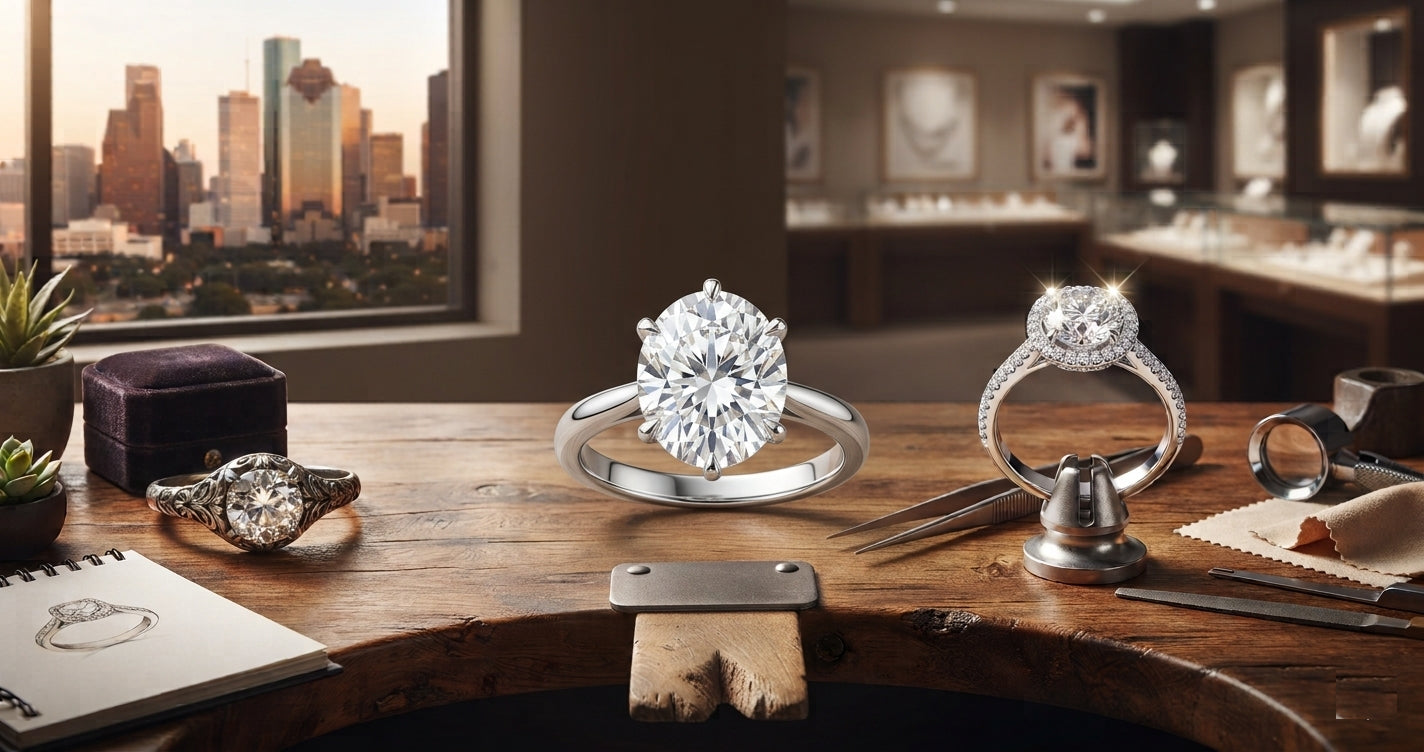
Quite the opposite. We're designing the ring specifically around your gemstone. You can bring sketches you've made yourself, photographs you've saved for inspiration, ideas from rings you've tried on, or simply a list of details you like.
We can combine elements from different designs, change proportions, adjust how high or low the diamond sits, add side stones, alter the metal, or start from a completely new concept. And don't assume the shape of your inherited diamond dictates the style of ring you have to make.
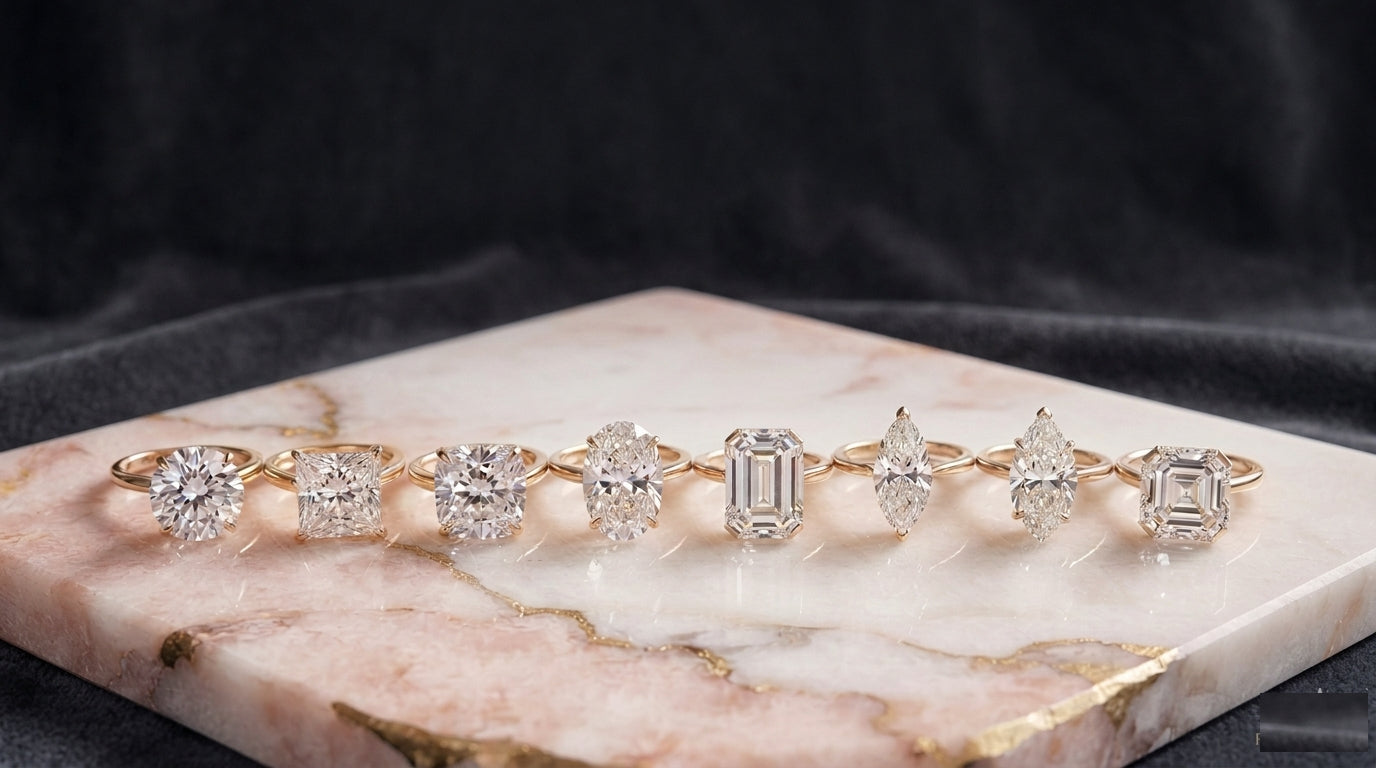
A ring design you love with an oval center can inspire a completely new design built around your inherited round, emerald, marquise, or unusually shaped diamond.
That's the advantage of custom. The ring is made for the gemstone—not the other way around.
We also strongly encourage trying rings on before finalizing your design. A ring that looks perfect in a photograph can feel completely different on your hand. Conversely, a style you never considered may have exactly the proportions or details you've been looking for. Keep an open mind and try as much as possible.
Will My Diamond Be Verified or Certified First?
Every inherited gemstone that comes into our store begins with professional gemological evaluation. Depending on the gemstone, our testing may include a lab grown diamond detector, thermoelectric diamond tester, microscopic examination, and other professional gemological instruments.
For colored gemstones, our evaluation may also involve instruments such as a refractometer, dichroscope, spectroscope, or polariscope. We inspect, measure, and preliminarily grade the gemstone and identify any visible condition issues. We also test diamonds for origin to determine whether they are natural or laboratory-grown.
If your diamond or gemstone already has a grading or identification report, we'll verify that the report matches the stone. There is also an important distinction between our evaluation and independent laboratory certification.
While we can inspect and evaluate your gemstone in-house, there are circumstances where we may recommend sending it to GIA for further identification or a grading report. We'll discuss whether that makes sense for your particular stone.
And if we discover something unexpected during our inspection, we'll tell you. Trust is especially important when you're handing someone a piece of your family's history.
What Happens to My Diamond While the Ring Is Being Made?
We don't immediately start pulling stones out of your heirloom. First, we establish the preliminary design, budget, timeline, and overall plan. We want everyone comfortable with where we're going before we alter the original jewelry.
Once the project is approved, removing the inherited gemstone is one of the first production steps. The stone is then cleaned, precisely measured, weighed, inspected, graded, and documented so the final design can be built specifically around it. When multiple inherited stones are involved, they may also need to be cleaned and sorted.
At intake, we document your items and provide you with a detailed receipt and image. We disclose known condition issues and explain that additional concerns—such as a chip hidden beneath a prong—can occasionally become visible only after a gemstone is removed.
You should know what's happening to your jewelry at every stage.
Can I Use Other Family Diamonds in My Custom Ring?
Yes, and bring them with you. Sometimes smaller inherited diamonds can become side stones or accents in the new design. Other times, they may be better suited to another piece entirely.
Not every inherited stone necessarily needs to go into one ring. We'll evaluate what you have and help determine which stones make sense for the design you're trying to create.
This is where custom design becomes especially interesting. Instead of forcing family gemstones into a predetermined mounting, we can create the mounting around the stones themselves.
Unusual sizes, antique cuts, and unique shapes aren't necessarily obstacles. They're often what makes the finished ring special.
Can the Gold From My Old Ring Be Used in the New Ring?
Generally, a new ring requires new metal. There's a practical reason.
An heirloom ring may have been sized, repaired, soldered, and altered numerous times during its life. Traditional jewelry solder contains additional metals that allow repairs to be performed without melting the entire piece.
Trying to melt and recast all of that old metal can introduce contamination, porosity, and other complications that may prevent us from achieving the clean, strong casting we want—particularly around something as important as the prongs holding your center diamond.
In certain circumstances, inherited gold may be suitable for another project, such as a solid wedding band, and we're happy to discuss those possibilities.
Otherwise, the old metal is still yours. We can test its precious-metal content and apply its raw-material value as a credit toward your new ring.
That creates a beautiful connection: not only can Grandma’s diamond become part of your engagement ring, but in a way, Grandma and Grandpa helped purchase the new ring too—a gift from one generation that can be cherished for generations to come.
How Much Does a Setting-Only Custom Engagement Ring Cost?
Most of our engagement ring settings fall somewhere around$1,000 to $5,000, although designs can certainly fall below or above that range. Metal choice, complexity, accent diamonds, and the amount of material required all affect the final price.
The center diamond is often the largest portion of an engagement ring's total cost, so already owning your gemstone can represent meaningful savings from the beginning. But with an inherited diamond, we think there's something considerably more valuable than the savings.
You already own the part of the ring that can't be replaced: its story.
Recommended Read -How Much Does an Engagement Ring Cost in Houston? A 2026 Budget Guide
How Long Does Custom Engagement Ring Design Take?
Mostcustom engagement rings are completed in approximately three to four weeks, although every project is different. After approval, the first phase typically involves removing, cleaning, measuring, weighing, grading, and sorting the inherited gemstones. Depending on how many stones are involved, this can take up to a week or longer.
Around the second week, we work toward final design approval using a rendering, wax model, or sometimes both. Production and final completion typically follow during weeks three and four.
More complicated projects can take longer. Multiple rounds of design changes, intricate construction, matching additional gemstones, or designs incorporating hundreds of stones can extend the timeline. We'd rather take the appropriate amount of time than rush something this important.
Why Use an Inherited Diamond in a New Engagement Ring?
Because the story continues. Imagine that Grandpa gave the diamond to Grandma nearly a century ago.
She wore it.
Another family member inherited it and continued wearing it.
Eventually, it made its way to you.
You don't have to wear Grandma's ring exactly as she did to honor what it represents.
Resetting that diamond into an engagement ring made specifically for you doesn't erase its history.
The story remains. The next chapter begins.
And we'd genuinely like to hear that story.
We love working with clients who bring us family gemstones and tell us where they came from, who wore them, and what they mean.
If you're reading this and don't have an inherited diamond, come see us anyway.
We can help you select the gemstone that may one day become the inherited diamond your own family tells stories about.
Book a Custom Engagement Ring Appointment in Houston
If you have an inherited diamond or gemstone and are wondering what could be done with it, bring it with you.
We'll inspect it, explain what you have, discuss the risks and possibilities, and start exploring designs that fit the gemstone, your style, and your budget.
There is no obligation to know exactly what you want before you arrive.
That's what the conversation is for.
Book a custom design appointment at Dubin's Fine Jewelry in Houston and bring your family's story with you.
Frequently Asked Questions
Can I bring my own diamond to have an engagement ring made?
Yes. Dubin's Fine Jewelry can create a custom engagement ring around a customer-owned natural or lab-grown diamond, as well as many inherited colored gemstones.
Will you verify my inherited diamond before using it?
Yes. We inspect, measure, and evaluate inherited gemstones using professional gemological equipment. Diamonds are also tested to determine natural or laboratory-grown origin. When appropriate, we may recommend sending a gemstone to GIA for additional identification or certification.
Can a chipped diamond be used in a new engagement ring?
Sometimes. It depends on the location and severity of the damage. We will inspect the gemstone and discuss the risks of removing, resetting, or potentially recutting it before proceeding.
How much does it cost to have my diamond set in a custom engagement ring?
Most Dubin's Fine Jewelry engagement ring settings fall approximately between $1,000 and $5,000, although simpler or more elaborate designs may fall outside that range. Metal, accent stones, design complexity, and materials all affect the final price.
Can I use the gold from the original ring?
We generally recommend new metal for an engagement ring because older jewelry may contain solder and previous repairs that can create complications during recasting. The precious-metal value of the original piece can instead be applied as a credit toward the new ring. In certain projects, the original gold may be suitable for another use.
How long does a custom engagement ring take?
Most custom engagement rings take approximately three to four weeks. Complex designs, numerous inherited gemstones, additional design revisions, or specialized work can require more time.
Is it rude to bring my own diamond to a jeweler?
Not at Dubin's Fine Jewelry. We welcome inherited diamonds and gemstones. Bring the jewelry and, even better, bring the story behind it.