



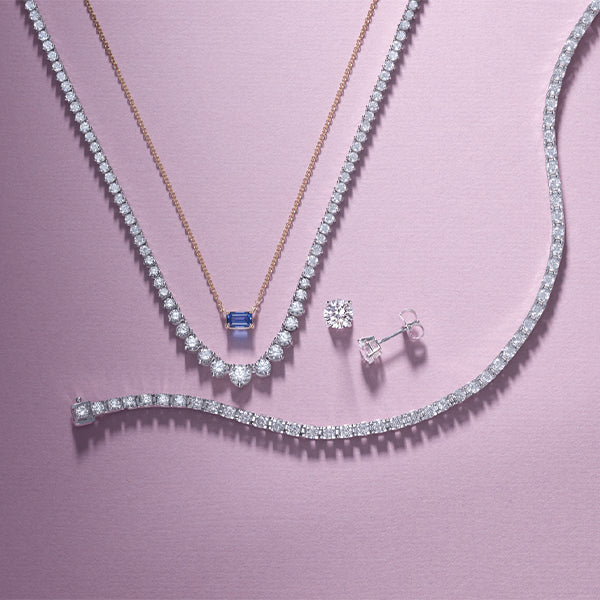




Lab-grown diamonds have a place in fine jewelry. The more interesting question is:do they have a place in your jewelry collection?Maybe you've always wanted a diamond tennis bracelet. Maybe you'd love to experiment with an eternity band or try a jewelry trend without making the same financial commitment you might make with natural diamonds. Or perhaps you're choosing a piece to commemorate one of life's biggest milestones and hope it will eventually become a family heirloom.
Those aren't necessarily the same purchase—and they don't have to have the same answer. At Dubin's Fine Jewelry,we offer both natural and lab-grown diamonds. We don't believe there's a universally right or wrong choice. Understanding what you're buying, how it was made, its quality, and what you expect from it long-term is far more important.
What Is a Lab-Grown Diamond?
A lab-grown diamond is a real diamond created in a controlled environment rather than formed naturally within the earth. Lab-grown diamonds have essentially the same chemical composition, crystal structure, optical properties, and physical properties as natural diamonds. They are not diamond simulants such as cubic zirconia or moissanite.
The primary difference is origin. Natural diamonds formed within the earth millions to billions of years ago. Lab-grown diamonds are manufactured using technology, primarily through High Pressure High Temperature (HPHT) or Chemical Vapor Deposition (CVD) processes.
But don't make the mistake of assuming that all lab-grown diamonds are equal. Just like natural diamonds, lab-grown diamonds can have different colors, clarities, proportions, and quality of cutting and finishing. Some can also display characteristics related to their growth process when examined under magnification. GIA research has documented distinctive inclusions, graining, color zoning, and other characteristics associated with laboratory growth.
A grading report is helpful, but our advice remains the same as it is with natural diamonds:
Don't buy the certificate. Look at the diamond.
How Does Lab-Grown Diamond Jewelry Compare to Natural Diamond Jewelry?
Visually, a beautiful lab-grown diamond and a beautiful natural diamond can look virtually identical to the unaided eye. Advanced testing is generally required to reliably determine their origin. The bigger differences emerge when you consider rarity, long-term value, and why you're buying the jewelry in the first place.
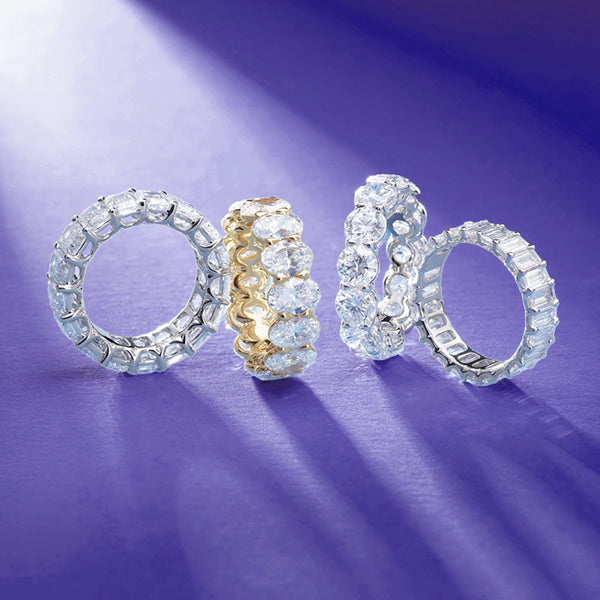
Lab-grown can make a lot of sense for someone who wants to experiment with a trend or add adiamond-intensive piece such as a tennis bracelet, tennis necklace, or eternity band to a jewelry collection. Natural diamonds, however, shouldn't be forgotten when you're curating jewelry around life's biggest milestones or creating pieces you hope will eventually pass from one generation to another.
Think about a beautifully handcrafted solid-wood dresser that has been in a family for generations. It can be refinished, repaired, enjoyed, and eventually passed down again. Compare that with a mass-produced piece of furniture that may serve its purpose perfectly well but was never purchased with the expectation that it would retain meaningful financial value for the next generation.
Lab-grown diamond jewelry can absolutely acquire tremendous sentimental value. If your child or grandchild falls in love with your lab-grown diamond someday, by all means, pass it down. The memories attached to that piece may be priceless.
But sentimental value and financial value aren't the same thing. Natural diamonds can carry both. That's an important distinction to understand before deciding which belongs in your jewelry collection.
Is Lab-Grown Diamond Jewelry Cheaper?
Yes, lab-grown diamonds generally cost considerably less than comparable natural diamonds. But we don't think price alone is the most useful way to have this conversation.
Instead, think about what you're trying to accomplish with the piece. Lab-grown diamonds can make larger diamonds look more accessible in pieces requiring numerous stones, such as eternity bands, tennis bracelets, and tennis necklaces. They can also be an interesting option if you'd like to experiment with a style or trend.
But lower diamond cost shouldn't mean lower jewelry quality. The internet is overflowing with inexpensive, mass-produced jewelry containing lab-grown diamonds. Sometimes manufacturers aren't just saving money on the diamonds—they're also saving it on gold weight, construction, clasps, prongs, finishing, and craftsmanship.
There's an old saying that applies particularly well here:
Buy cheap, buy twice.
A poorly constructed tennis bracelet that continually breaks isn't a bargain simply because it contains a lot of diamonds. Whether the diamonds are natural or lab-grown, you're still buying a piece of fine jewelry. It should be designed, constructed, and finished accordingly.
Seeing, holding, and examining a piece in person can tell you a tremendous amount about the quality of the jewelry—and the people standing behind it, figuratively and literally.
Does Lab-Grown Diamond Jewelry Hold Its Value Over Time?
This is one area where we believe consumers deserve a very clear answer.
Lab-grown diamonds currently have no resale, trade-in, or trade-up value.
In many pieces, the precious-metal value of the gold or platinum has more recoverable value than the lab-grown diamonds themselves. That doesn't make lab-grown jewelry a bad purchase.
Fine jewelry shouldn't primarily be purchased as a financial investment anyway. Jewelry is meant to be worn, enjoyed, celebrated, and associated with life's important moments.
But you should understand what you're buying. If you want to enjoy something for years and eventually pass it down to future generations, natural diamonds deserve serious consideration.
If you're primarily interested in enjoying a beautiful diamond piece today and long-term monetary value isn't important, lab-grown may fit your priorities perfectly.
Are Lab-Grown Diamonds Better for the Environment?
Not necessarily—and this may be the biggest misconception surrounding lab-grown diamonds.
Creating diamonds in a laboratory eliminates mining, but it doesn't eliminate environmental impact. Diamond growth requires significant energy, and the environmental footprint depends heavily on how that energy is generated.
China and India are major centers of lab-grown diamond production, and independent reporting has found significant reliance on coal-powered electricity within both countries' grids. At the same time, some producers use renewable energy, meaning the environmental footprint can vary substantially from one producer to another.
Here's an interesting question:
If two otherwise comparable lab-grown diamonds were available, but one was produced using independently verified carbon-neutral energy and cost 50% more, which would you buy?
There's no right answer.
But if environmental impact is one of your primary reasons for choosing lab-grown, it's worth considering how much the diamond's actual production method matters to your decision.
"Lab-grown" tells you where a diamond originated. It doesn't automatically tell you how sustainably it was produced.
Does Certification Matter for Lab-Grown Diamonds?
Yes—but perhaps not quite as much as some consumers assume.
Several laboratories issue reports for lab-grown diamonds. For larger diamonds, we generally prefer a grading report so the consumer has independent documentation of what they're purchasing.
For smaller diamonds and melee—typically under approximately 0.50 carats—individual grading reports often aren't necessary.
More importantly, don't allow a piece of paper to become more important than the diamond itself.
Two diamonds with similar information on their reports can look different in person. Cut quality, finishing, growth characteristics, and overall appearance still matter. We are selective about the lab-grown diamonds we offer for exactly this reason.
Can You Mix Natural and Lab-Grown Diamonds?
Absolutely. There is no jewelry rule saying everything has to match. We generally like consistency within a piece, but ultimately your jewelry belongs to you. If you have a natural diamond engagement ring and love a lab-grown eternity band, wear them together.
If you have a lab-grown center diamond today and decide years from now that you'd like to replace it with a natural diamond, we can help with that too.
Jewelry collections evolve. Your preferences, budget, milestones, and priorities will change throughout your life. Your jewelry can change with them.
Recommended Read -Ring Resetting in Houston: Give an Old Diamond a New Setting
Can Lab-Grown Diamond Jewelry Be Repaired?
Yes. Servicing lab-grown diamond jewelry is generally very similar to servicing natural diamond jewelry. If a diamond is lost from a band or bracelet, we can match the size and quality of the replacement stone. Prongs, clasps, settings, and other components can be repaired and maintained just as they would be in traditionally made natural diamond jewelry.
Where Can You See Lab-Grown Diamond Jewelry in Houston?
Currently, Dubin's Fine Jewelry stockslab-grown diamond stud earrings, with the possibility of expanding our in-store selection in the future.
However, most of the jewelry we offer can be created with lab-grown diamonds, including engagement rings, eternity bands, tennis bracelets, tennis necklaces, and custom designs.
If you're shopping online for a lab grown diamond, make sure you understand exactly what you're purchasing and look for a generous return policy without unnecessary restrictions. Photographs can tell you only so much about the weight, construction, finishing, and overall feel of a piece of jewelry.
Whenever possible, see it.
Hold it. Examine the diamonds. Look at the construction. And most importantly, buy from someone you trust. Lab-grown diamonds have a place in fine jewelry. Natural diamonds do too.
The goal isn't for us to decide which one you should buy. It's for you to understand the differences well enough to decide which one makes sense for you.
Curious where lab-grown diamonds might fit into your jewelry collection?Book a consultation at our Houston showroom to see and discover lab-grown diamonds for yourself.
Frequently Asked Questions
Are lab-grown diamonds real diamonds?
Yes. Lab-grown diamonds are real diamonds with essentially the same chemical, physical, and optical properties as natural diamonds. Their primary difference is origin: one is mass produced in a controlled environment, while the other formed naturally within the earth.
Is lab-grown diamond jewelry worth buying?
It can be. Lab-grown jewelry can make sense for someone interested in diamond-intensive pieces, experimenting with a trend, or simply prioritizing appearance over long-term monetary value. The right choice depends on what you want from the piece.
Does lab-grown diamond jewelry have resale value?
Lab-grown diamonds currently do not have resale, trade-in, or trade-up value. Consumers should purchase them because they want to own and enjoy the jewelry rather than because they expect the diamonds to retain financial value.
Is lab-grown diamond jewelry environmentally friendly?
It depends on how and where the diamonds were produced. Creating lab-grown diamonds requires significant energy, so diamonds produced using renewable energy may have a substantially different environmental footprint from those produced using fossil-fuel-heavy electricity grids.
Can I wear lab-grown diamonds with natural diamonds?
Absolutely. Natural and lab-grown diamonds can be worn together. There is no rule requiring your engagement ring, wedding band, earrings, or other jewelry to contain diamonds of the same origin.
Can lab-grown diamond jewelry be repaired?
Yes. Lab-grown diamond jewelry can generally be serviced and repaired similarly to natural diamond jewelry, including replacing lost stones when necessary.