






One of the first questions we ask during an engagement ring appointment is simple:
"What diamond shape do you love?"
For some people, the answer comes instantly.
"I've always wanted an oval."
"I've dreamed about an emerald cut since I saw my grandmother’s"
Others have no idea where to begin. The good news is there isn't a wrong answer. People often ask us which diamond shape we recommend. We don't. Think of it this way: chocolate, vanilla, and strawberry have all stood the test of time. None of them are objectively better—they're simply different. Diamond shapes work the same way. One thing we do like to point out is that the ring design says far more about your personality than the diamond shape itself.
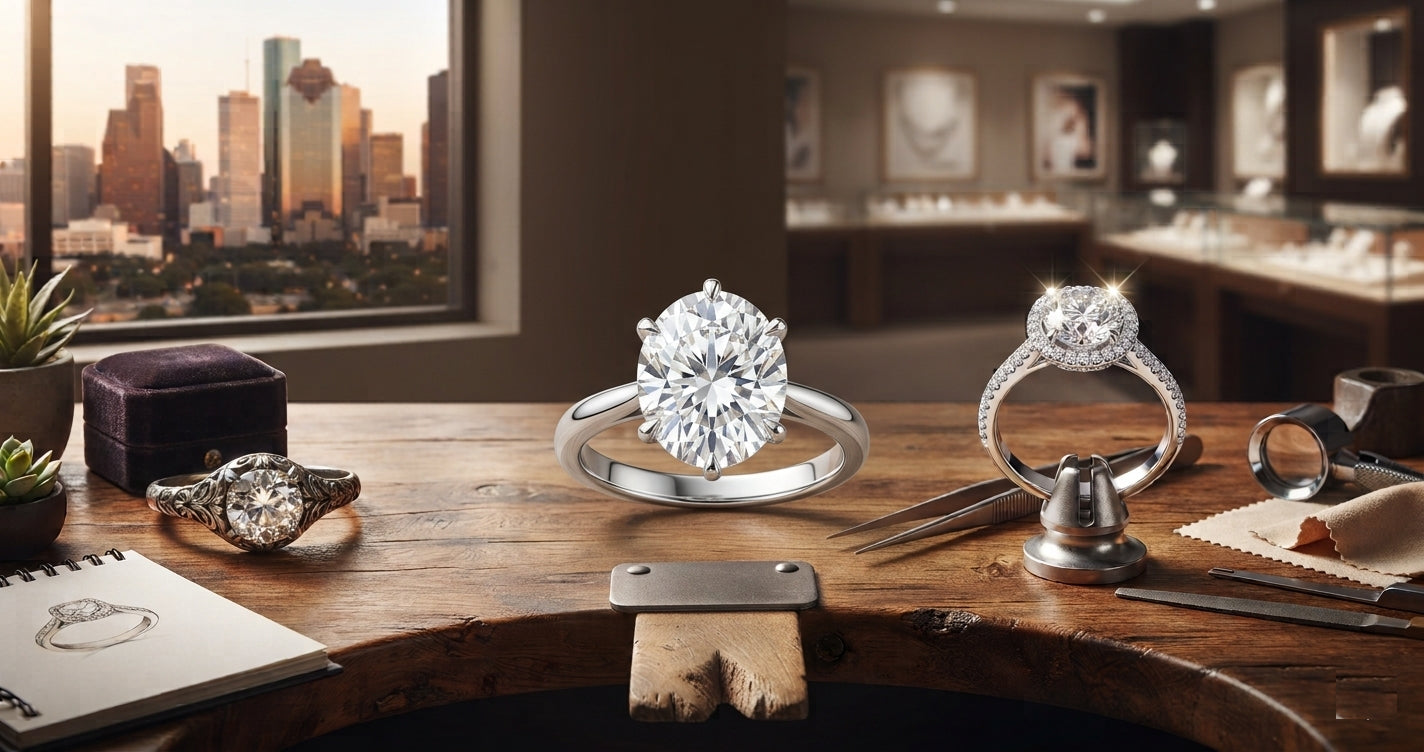
A round diamond set in a classic solitaire has a completely different feel than the exact same round diamond surrounded by vintage engraving and ornate details. The diamond didn't change. The ring design did. Rather than asking,"Which shape is best?" ask yourself:
"Which one makes me smile every time I look at it?"
Let's explore the most popular engagement ring diamond shapes and the unique characteristics of each.
What Are the Most Popular Diamond Shapes?
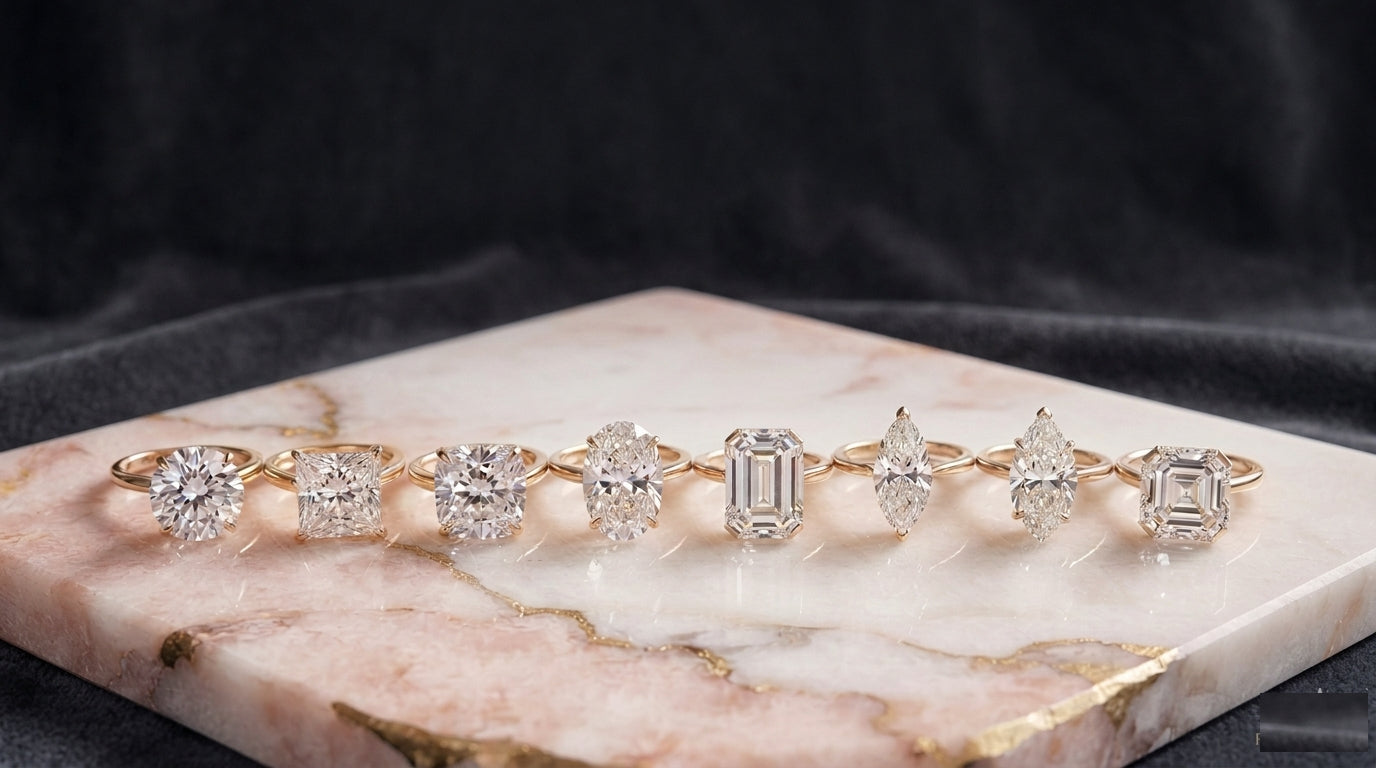
While there are dozens of diamond shapes available, these are the ones we see most often today. Based on current demand, engagement ring popularity generally looks something like this:
-
Round Brilliant
-
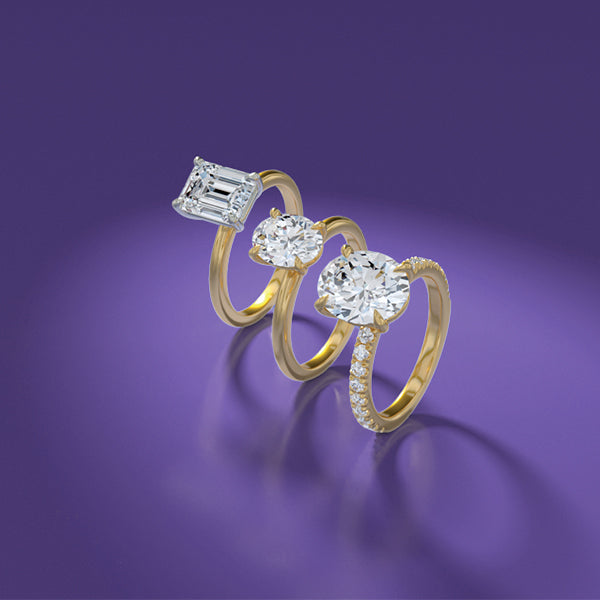
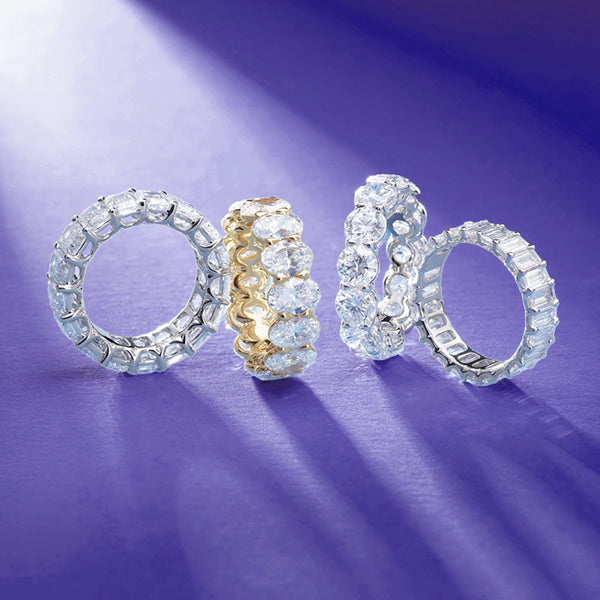
Oval
-
Elongated Cushion
-
Emerald
-
Marquise
-
Radiant
-
Pear
-
Asscher
-
Princess
-
Heart
Trends certainly influence this list and they change more quickly today than ever before, but beautiful diamonds never truly go out of style.
Round Brilliant
The round brilliant is the benchmark. It is the most popular engagement ring diamond for good reason. The modern round brilliant didn't appear overnight. It evolved over centuries as diamond cutters learned how light behaves inside a diamond.
Its evolution looks something like this: Old Mine Cut (arrow) Old European Cut (arrow) Modern Round Brilliant
Each generation became brighter, more symmetrical, and more efficient at returning light to the viewer. Today, the round brilliant remains the most researched diamond cut in the world.
Thanks to decades of work by pioneers such as Marcel Tolkowsky, with ongoing research by organizations including GIA and AGS, we understand incredibly well which proportions maximize brilliance, fire, and scintillation.
Everything in the diamond industry is measured against the round brilliant. It is also the only diamond shape currently receiving a standardized GIA cut grade. If you're looking for maximum sparkle and timeless beauty, the round brilliant remains difficult to beat.
Oval
Ovals have become one of today's most sought-after diamond shapes. They offer many of the bright, lively characteristics of a round brilliant while creating an elegant elongated appearance that many people love. An oval can make fingers appear longer and more slender—or beautifully complement an already slender hand.
One characteristic to pay attention to is thebow tie. Nearly every oval diamond contains some degree of bow tie. The goal isn't eliminating it entirely. Instead, we're looking for a bow tie that appears white, bright, and sparkly, not dark or distracting.
This comes down to careful diamond selection. At Dubin's Fine Jewelry, we are extremely selective with every oval we bring in, so our clients can compare bright, beautiful diamonds without worrying about poorly proportioned stones.
And one final reminder: When buying fancy shapes like ovals, pay close attention to thedimensions, not just the carat weight.
Cushion
If a round brilliant and a princess cut had a baby, it would be a cushion.
Soft corners.
Beautiful sparkle.
A timeless shape.
The cushion enjoyed tremendous popularity throughout the early 2000s and 2010s before cooling slightly.
Then, in 2025, a high-profile celebrity engagement helped bring the elongated cushion into the spotlight almost overnight.
This time, however, it wasn't the square cushion making headlines. It was her longer relative, the elongated cushion. Today's buyers can choose between the more common modern brilliant cushions with exceptional sparkle or antique-inspired cushions that echo the charm of historic old mine cuts.
Whether this shape ever becomes the most popular diamond again is anyone's guess.
One thing is certain: A beautiful cushion diamond never really goes out of style.
Emerald
Emerald cuts are unlike most other diamonds. Rather than producing tiny flashes of sparkle, their broad step facets create dramatic flashes of light often described as a "hall of mirrors."
Their beauty comes from simplicity. Most emerald cuts are rectangular, although some are nearly square. Once an emerald cut becomes truly square, it is referred to by a different name, the Asscher cut.
Because of the long, open facets, emerald cuts deserve special attention when evaluating clarity. Forget relying solely on the plotting diagram.
Those broad facets create windows directly into the heart of the diamond, meaning even small inclusions can sometimes be more noticeable than they would be in a brilliant-cut stone.
This is one of the best examples of why seeing the actual diamond matters far more than reading a grading report alone.
Marquise
If there were an award for "biggest comeback," the marquise would win.
After enjoying enormous popularity throughout the 1970s & 1980s, the marquise quietly faded into the background for many years.
But in 2026, it came roaring back.
Its dramatic pointed ends and elongated proportions create one of the largest face-up appearances of any diamond shape.
Many marquise diamonds hover around a 2:1 length-to-width ratio, making them appear remarkably large for their carat weight.
Like ovals and pears, careful cutting is essential to minimize dark bow ties and maximize brilliance.
Radiant
If sparkle is your priority but you're looking for something other than a round diamond, the radiant deserves a serious look.
Radiants combine brilliant-cut faceting with crisp, modern lines. One interesting characteristic often surprises people.
The signature clipped corners that define a radiant are frequently hidden beneath the prongs of a traditional setting.
As a result, a radiant can sometimes resemble a cushion and vice versa. If you love the unmistakable outline of a radiant, consider a bezel setting.
Because the metal follows the exact shape of the diamond, a bezel beautifully highlights those distinctive cut corners.
Pear
Pear-shaped diamonds combine the elegance of an oval with a dramatic point. They create a graceful elongated appearance while offering a distinctive silhouette unlike any other shape.
Like ovals, pears should also be evaluated carefully for bow ties. Again, the goal isn't the complete absence of a bow tie.
We're looking for one that appears bright, white, and lively, not dark or distracting. Orientation is another fun consideration. While most pears are worn with the point toward the fingertip, personal preference always comes first.
Asscher
Think of the Asscher as the shorter relative of the emerald cut. Both share beautiful step facets and dramatic flashes of light.
The difference is proportion. Where emerald cuts are elongated, Asschers are square with deeply trimmed corners that create a distinctive octagonal outline.
Their symmetrical architecture gives them a refined, Art Deco feel that continues to attract collectors who appreciate vintage-inspired design.
Princess
For years, the princess cut sat comfortably near the top of engagement ring popularity.
Today it isn't quite as common, but it remains a beautiful option.
Its sharp corners and clean geometry create a crisp, contemporary appearance while delivering excellent brilliance.
Like every shape, popularity comes and goes. Beauty does not.
Heart
Heart-shaped diamonds are among the most recognizable—and the most personal—diamond shapes available.
They're relatively uncommon in engagement rings, making them a niche choice for someone looking for something truly unique.
Even if a heart isn't your first choice for an engagement ring, don't overlook it elsewhere.
Heart-shaped diamonds make beautiful pendants, anniversary bands, earrings, and other meaningful gifts.
After all, there is something wonderfully fitting about wearing the universal symbol of love.
What Does Each Diamond Shape Symbolize?
You may have seen articles claiming that certain diamond shapes symbolize specific personality traits.
We tend to look at it a little differently.
In our experience,the ring design often says far more about someone's style than the diamond shape itself.
A round diamond in a classic solitaire feels timeless. The exact same round diamond surrounded by intricate vintage engraving tells an entirely different story.
An oval diamond in a sleek bezel setting feels modern.
The same oval in an ornate halo has a completely different personality.
The diamond shape stayed the same.
The ring design changed everything.
Which Diamond Shape Looks the Biggest?
If maximizing visual size is your goal, elongated shapes generally create the largest face-up appearance.
Marquise diamonds often look the largest because of their dramatic proportions.
Ovals, pears, and elongated cushions also tend to appear larger than many square shapes of equal carat weight.
Even among non-elongated diamonds, a round brilliant often appears larger than a princess cut or square cushion of the same weight.
Remember, however, that every diamond is unique.
When selecting fancy shapes, pay close attention to the actualmillimeter dimensions, not simply the carat weight.
Which Diamond Shape Is the Most Affordable?
When all other factors are equal, round brilliant diamonds are typically the most expensive.
They remain the most sought-after shape, and cutting a round brilliant to ideal proportions requires sacrificing more of the original rough crystal than many fancy shapes.
Fancy shapes have traditionally offered a little more visual size for the money. In many cases, however, the actual price difference between a round and a comparable fancy shape may be surprisingly small, maybe less than 10%. Every shape also has its own market dynamics, so pricing changes over time with supply and demand.
Our advice? Don't choose a fancy shape simply because it may be slightly less expensive if your heart has always been set on a round. Over the lifetime of an engagement ring, that modest difference in price is quickly forgotten, while the diamond you truly wanted is something you'll enjoy every single day.
Instead of asking,"Which shape costs less?" ask yourself,"Which shape would I regret not choosing?" That's usually the better decision.
Recommended Read -How Much Does an Engagement Ring Cost in Houston?
Should You Choose a Diamond Shape Because It's Trending?
Probably not. Diamond trends move faster today than they ever have before. Choosing a shape simply because it's popular today is an easy way to wake up a few years from now wondering why you didn't choose the one you truly loved.
Instead, find the balance between what excites you today and what you can imagine wearing for decades to come. If you'd like to experiment with trends, consider doing it bycustomizing the ring design instead.
Settings can easily be redesigned years later. Changing the shape of your center diamond is a much bigger decision.
How Do You Choose the Right Diamond Shape?
There isn't a formula. ChatGPT or Claude can’t tell you.
There isn't a ranking. And there isn't a "best" diamond shape.
The right shape is the one that captures your attention every single time you see it. That's why we encourage every client to compare multiple shapes side by side. You may arrive convinced you want an oval and fall in love with an emerald.
Or think you've always wanted a round until you see a radiant sparkling beside it. Until you see them together, you simply don't know.
See Loose Diamonds in Houston
Reading articles is a wonderful place to begin your research. Eventually, though, there comes a point where photographs and videos simply can't replace seeing diamonds in person.
During aprivate appointment at Dubin's Fine Jewelry, we'll show you multiple diamond shapes side by side under proper lighting so you can compare their sparkle, proportions, and personality for yourself.
We'll explain what to look for, answer your questions, and help you discover the shape that feels right. Not because it's the most popular, but because it's the one you'll still love decades from now.
Frequently Asked Questions
What is the most popular engagement ring diamond shape?
The round brilliant remains the most popular diamond shape, followed by oval, elongated cushion, emerald, and marquise diamonds.
Which diamond shape looks the biggest?
Marquise diamonds generally have the largest face-up appearance, followed by other elongated shapes such as oval, pear, and elongated cushion.
Are round diamonds more expensive?
Typically, yes. Round brilliant diamonds are usually the most expensive shape when all other factors are equal because of their demand and the amount of rough diamond lost during cutting.
What is the best diamond shape?
There isn't one. The best diamond shape is the one that fits your personal style and still makes you smile years from now.
Should I buy a trending diamond shape?
Trends can be fun, but they shouldn't be the deciding factor. Choose the shape you genuinely love, and let the ring design reflect current styles if you'd like to incorporate trends.