







For many couples, shopping for wedding bands is one of the first major decisions they make together. Unlike the engagement ring, which is often selected by one partner and presented as a surprise. The wedding bands are usually chosen side by side. It is one of the few wedding appointments without guest lists to finalize, vendors to coordinate, or timelines to manage.
It is simply two people trying on rings, sharing opinions, laughing at styles they never expected to like, and discovering the bands they will wear every day for the rest of their lives. Honestly, it is one of our favorite appointments. The goal is not to find the trendiest wedding band or the one everyone else is wearing. It is to find the one that feels like you.
Whether that is a timeless gold band, a classic diamond eternity band, or something completely unexpected, your wedding band should make you happy every time you look at your hand.
What Are the Most Popular Wedding Band Styles?
Wedding band styles have evolved over the years, but one thing has not changed: the classics remain beautiful. The difference today is that couples have more freedom than ever before. There are fewer rules and more opportunities to choose a design that reflects your personality, lifestyle, and engagement ring.
Diamond Wedding Bands
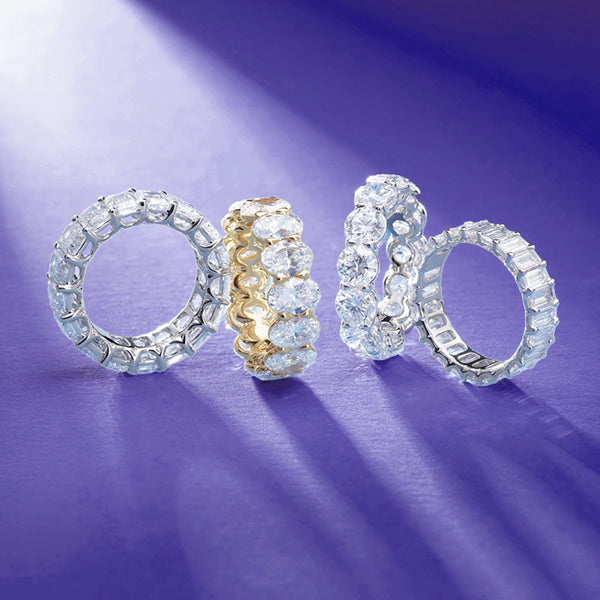
Fordiamond bands, shared-prong and split-prong designs remain enduring favorites. These styles expose more of each diamond, creating a bright, elegant appearance that pairs beautifully with nearly every engagement ring. They work with round diamonds, oval diamonds, emerald cuts, and other shapes, regardless of the metal color or size of the stones.
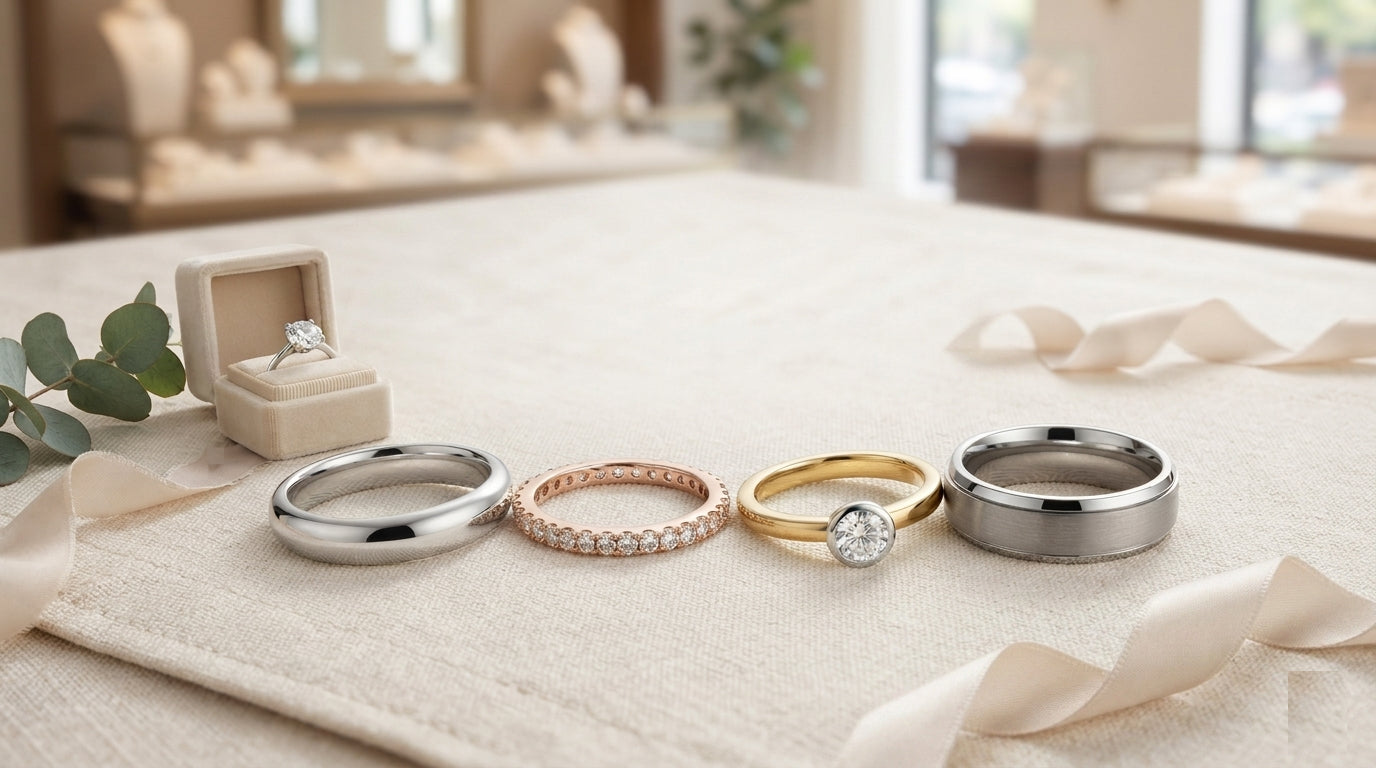
Bezel-set bands have also enjoyed a long stay in the trend spotlight, particularly in yellow gold. A bezel surrounds each diamond with metal, creating a clean, polished appearance while offering added protection. Because the band must be wider than the diamonds it holds, larger bezel-set stones naturally create a wider ring. To maintain a delicate look, elongated diamonds such as ovals, emerald cuts, or marquises are often positioned east-to-west, or horizontally.
Classic Gold and Platinum Bands
Sometimes, less really is more. A simple gold or platinum wedding band is one of the most timeless pieces of jewelry a person can own. These bands can remain completely polished or be personalized with finishes and textures such as:
-
Brushed or matte surfaces
-
Hammered finishes
-
Beaded edges
-
Rope patterns
-
Chevron details
-
Engraved textures
Some specialty finishes soften or wear over time, especially on a band worn every day. That is not necessarily a problem. Most finishes can be reapplied, refreshed, or even changed later.
Modern and Mixed-Metal Bands
For something wider or more contemporary, mixed-metal bands offer a distinctive alternative. Tantalum paired with yellow or white gold has become especially popular formen’s wedding bands. The darker metal creates contrast, while the gold adds warmth and refinement. Modern does not have to mean temporary. A well-proportioned mixed-metal design can feel personal and current while remaining wearable for decades.
How Do You Match a Wedding Band to an Engagement Ring?
Start with the engagement ring. If the engagement ring is simple and classic, nearly anything can work. You may choose a coordinating diamond band, a plain gold band, or something completely unexpected to create contrast.
If the engagement ring has a distinctive shape or detailed design, beginning with a matching or complementary band is often the first approach. We can use the curves, stones, metal, and design elements of the engagement ring as inspiration.
At Dubin’s Fine Jewelry, flush-fitting wedding bands are one of our specialties. A flush-fit band sits closely beside the engagement ring without a noticeable gap. Achieving that look often starts with the original engagement ring design, which is one reasonall of our rings are made to order.
Even when an engagement ring was purchased elsewhere, we can often create a custom band that follows its shape. In some cases, thoughtful modifications can be made to the engagement ring so the two rings sit more closely together.
Still, matching does not always mean the preferred choice. We are seeing more couples choose contrasting bands, different metals, or designs that reflect their individual personalities. Your wedding band should feel like a natural extension of your story. Whether that means a perfectly coordinated set or two completely different styles, the right choice is the one that makes you excited to wear it.
What Are the Best Wedding Band Metals?
There is no single best metal. The right choice depends on your preferred appearance, lifestyle, engagement ring, and maintenance expectations. Popular options include:
-
14K white, yellow, or rose gold
-
18K white, yellow, or rose gold
-
Platinum
-
Tantalum
-
Tantalum and gold combinations
Platinum is naturally white, durable, and popular for diamond wedding bands. Gold provides more choices in color and karat, allowing couples to create traditional or contrasting combinations. Do not be afraid to mix metals.
A platinum diamond eternity band can look striking beside a bold yellow gold engagement ring. White gold or platinum can also pair beautifully with rose gold. Your wedding band does not have to match your engagement ring perfectly, and it certainly does not have to match your spouse’s band. Marriage is about building a life together, not wearing identical jewelry.
Recommended Read -Lab-Grown vs Natural Diamonds: What You Need to Know Before Buying
Should You Choose an Eternity or Half-Eternity Wedding Band?
Both can be beautiful, comfortable, and practical choices. A half-eternity band features diamonds across the visible upper portion of the ring. An eternity band continues the diamonds all the way around.
Half-eternity bands are generally easier to size, although eternity bands can also be resized in many situations. With smaller diamonds, the price difference between half and full eternity styles may be modest. As the individual diamonds and total carat weight increase, however, the difference can become substantial.
Many clients choose eternity bands for one beautifully simple reason: wedding bands naturally rotate on the finger throughout the day. With diamonds encircling the entire band, sparkle remains visible no matter how the ring turns. Comfort can be achieved with either style.
Larger diamonds may sit higher from the finger and feel unfamiliar at first. In most cases, that sensation fades within a few days or weeks as the wearer adjusts.
Do Men’s and Women’s Wedding Bands Have to Match?
No. Traditionally, women’s wedding bands were more likely to include diamonds, while men’s bands were usually plain. Today, couples have far more flexibility.
Women may prefer a simple gold or platinum band. Men may choose diamonds, mixed metals, distinctive textures, or other design details. Some couples select matching rings, while others choose completely different styles. Lifestyle should also influence the decision.
Someone working with their hands, wearing gloves regularly, or working in an environment where diamonds are less practical may prefer a plain band for everyday wear. Some clients select both a simple band for work and a diamond band for evenings, weekends, and special occasions. The wedding band should fit the life of the person wearing it.
How Do You Get the Right Wedding Band Fit?
Fit involves more than finding a ring-size number. Narrow bands fit differently from wide bands. Wearing several rings on one finger can also require a slightly larger size than wearing a single band alone. All of our wedding bands are crafted with apremium comfort-fit interior, which is superior to the lighter-weight, sharper, and less comfortable flat-inside style.
Trying on different styles is essential. One of the biggest mistakes couples make is deciding what they want from a photograph alone. A band that looks perfect online may not sit well beside the engagement ring. Conversely, a style you never considered may look as though the two rings were always meant to be together.
Keep an open mind. Durability also matters. Bands narrower than approximately 1.5 millimeters may be too delicate for years of everyday wear. When possible, we generally recommend a width closer to 1.7 to 2.0 millimeters or more.
We also recommend avoiding softer gemstones such as pearls, opals, and tanzanite in wedding bands intended for daily wear. These stones are beautiful, but they are more vulnerable to scratching, chipping, loss, and general wear than diamonds or sapphires.
When Should You Shop for Wedding Bands?
All of our wedding bands are made to order. Plain gold or platinum bands are often completed within one to two weeks. Diamond, gemstone, and custom-designed bands typically require two to four weeks.
Starting several months before the wedding is usually a comfortable timeline. Beginning sooner gives you even more time to consider options and make decisions without pressure. After months of guest lists, vendor coordination, and wedding logistics, many couples tell us that wedding band shopping becomes one of the most enjoyable appointments in the entire planning process.
You get to slow down.
Try on beautiful rings.
Compare styles.
Laugh together.
And remember why you are planning the wedding in the first place.
Where Can You Get Wedding Band Fittings in Houston?
At Dubin’s Fine Jewelry, every wedding band is made to order and tailored to your engagement ring, personal style, and everyday life. During your appointment, we will help you compare metals, diamond settings, finishes, eternity styles, and comfort options. We can also design a custom band to sit flush with your engagement ring or create something completely original.
Whether you are searching for classic gold bands, diamond eternity rings, modern mixed-metal styles, or two wedding bands that are intentionally different, the experience should be enjoyable. These are the rings you will wear through anniversaries, family milestones, ordinary mornings, and unforgettable celebrations.
They are not simply another item on the wedding checklist. They are part of the life you are beginning together.
Ready to find the rings you will wear forever? Start the conversation with our team andschedule a wedding band appointment at our Houston showroom near The Galleria.
Frequently Asked Questions
What are the most popular wedding band styles?
Shared-prong and split-prong diamond bands remain classic choices. Bezel-set diamond bands, simple gold or platinum rings, textured finishes, eternity bands, and mixed-metal designs are also popular.
Should my wedding band match my engagement ring?
It can, but it does not have to. Some clients prefer a coordinated set, while others choose contrasting metals, shapes, or styles. The best combination is the one you enjoy wearing.
Is an eternity band better than a half-eternity band?
Neither is universally better. Eternity bands keep diamonds visible as the ring turns, while half-eternity bands may offer lower cost. Both can be comfortable and beautiful.
Can a wedding band sit flush with any engagement ring?
Many engagement rings can be paired with a flush-fitting custom band. In some cases, the engagement ring may require a curved band or a small design modification to achieve a closer fit.
How long does it take to make a wedding band?
Plain gold or platinum bands are often completed within one to two weeks. Diamond, gemstone, and custom wedding bands generally take two to four weeks.